Can the premium be maintained?
If yes
Test retained claim cost
If no or unknown
Adjust needs or reconsider purchase

Move from the reason you want protection to an accurate application, then verify the policy and prepare for the first claim.
Use these checkpoints to frame the literal question before reading the full guide.
To insure your dog, first decide which future veterinary risks you want covered, then compare an accurate dog profile against the available policy terms. Enrollment is a sequence: suitable product, honest history, chosen benefits, acceptance and effective dates. Stop whenever a missing answer could change the protection you think you are buying.
The sections below show how to verify the answer and what can change it.
If the goal is help with unexpected veterinary expenses, investigate accident-and-illness or accident-only products. If the goal is paying for planned preventive services, examine a routine-care allowance separately. If the concern is a bite, damaged property or another person’s injury, do not assume a veterinary-expense policy answers that liability question. The NAIC distinguishes core pet product types and their benefit structures.
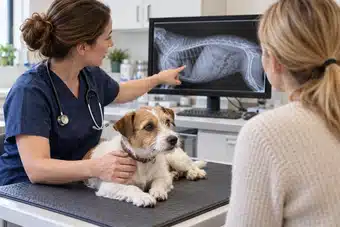
If the dog is currently sick or injured, seek veterinary advice and keep the real onset date. Buying a policy after signs appear does not establish protection for that event. If the dog has historical records, assemble them before answering questions; if records are missing, state the gap accurately instead of claiming an absence of earlier illness.
Assume an invented future event qualifies. A $2,400 invoice includes $300 of excluded costs, leaving $2,100 eligible. With a fictional 80%-first formula and $400 deductible remaining, payment is $1,280 if the limit is sufficient. The owner ultimately retains $1,120, plus premiums, and may initially need all $2,400 to pay the clinic. These figures describe a test of affordability, not an insurer’s offer.
| Question | If yes | If no or unknown |
|---|---|---|
| Can the premium be maintained? | Test retained claim cost | Adjust needs or reconsider purchase |
| Can the clinic bill be funded? | Confirm actual payment route | Do not rely on an assumed instant reimbursement |
| Does the benefit cover the intended future risk? | Inspect exclusions and timing | Find the exact clause before choosing |
| Does the issued policy match the quote? | Save the complete bundle | Resolve the discrepancy before relying on it |
Keep policy terms, deductible, reimbursement and limits beside the quote so the comparison stays consistent.
Keep the submitted answers, quote, acceptance and policy documents together. Check the named dog, issuer, state, benefits and dates against the original choices. A payment receipt alone should not replace this reconciliation. Where a form is amended by an endorsement, retain both documents so a shortened summary cannot hide the change.
The public Pets Best specimen’s claim section requests invoice and medical-record evidence. Prepare the file before a stressful event: clinic details, earlier records, referral reports and a place for itemized bills. This is an example of claims preparation, not submission or approval of any actual application.
Once the documents and budget fit, use the actual offer’s process and check the resulting confirmation. If they do not fit, retain the specific reason: unavailable age, unresolved history, missing benefit, unmanageable cash requirement or noncomparable quotes. A named reason gives you a useful next comparison; a vague instruction to buy the cheapest plan does not.
Answer the actual questions accurately and retain the records. A missing file is not permission to give a misleading answer.
Check the issued policy’s acceptance and effective date, then separately check the timing rules for the type of event.
Keep the policy terms beside the price, then continue to rates when the comparison is clear.